
Physical trust infrastructure
From counter intake to confident handoff.
A provider-neutral model for turning participating retail locations into safe drop-off, documentation, category-check, packing, pickup, and shipping nodes.
Follow the custody path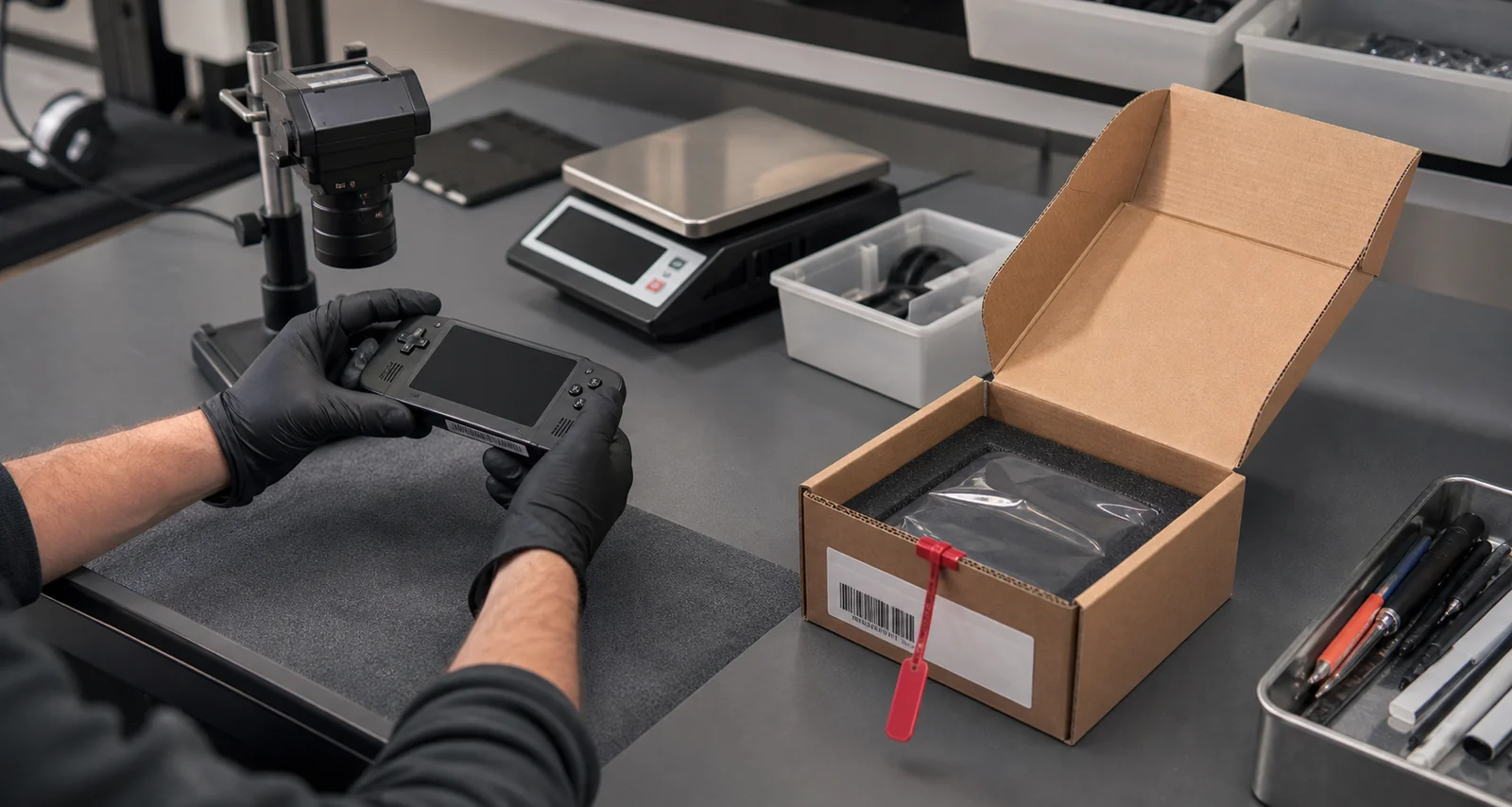
In-store flow
One item, one custody record, clear scopes.
Intake comes before any check. A store visit never turns a blanket "verified" badge on; each completed action earns its own precise label.
Reserve intake
Seller selects an eligible location, service tier, category, and time. Capacity and prohibited-item rules are checked first.
Check in securely
Employee sign-in (SSO) confirms the store and staff role. Staff match the reservation and item without placing customer data on the label.
Seal and document
An opaque serialized security label is scanned, applied, and photographed with the received condition and included parts.
Run scoped checks
Condition, serial, function, and category authenticity outcomes remain separate. Only qualified roles can complete specialist checks.
List with proof
Buyers see what was checked, when, and at which capability tier, plus the checks that were not performed.
Pack or release
Managed shipping records packing and carrier acceptance. Pickup requires an intact seal, staff confirmation, and one-time buyer challenge.
Capability tiers
Scale access broadly. Concentrate expertise.
Drop-off and pickup
Reservation check-in, customer handoff, secure storage, and authorized release.
Evidence and sealing
Standard photos, included-parts count, opaque label application, and initial custody event.
Category checks
Trained checks by device, collectibles, cards, fashion, or other approved category scopes.
Managed packing
Approved materials, pack evidence, carrier label separation, acceptance scan, and exception handling.
Remote or regional review
High-risk categories route to qualified experts; ordinary intake staff never overstate authenticity.
Live commerce support
Controlled inventory intake and custody for approved drops, streams, or local marketplace events.
Item history
A clear record from store counter to customer handoff.
Each step records when and where it happened, which staff role handled it, what changed, and which photos or notes support it. Customer views hide staff IDs, full serial numbers, storage locations, and internal notes.
- Intake reservedEligible location, service, category, and appointment are locked for a short window.
- Received and sealedItem match, initial condition, label application, and first evidence set are recorded.
- Check completedEach scoped result is signed by a role authorized for that category and location.
- Stored or packedLocation changes, relabel events, pack materials, and exceptions append to custody.
- Carrier accepted or pickup readyA carrier scan or staff-ready update starts the customer handoff window.
- Released, delivered, issue windowOne-time release or delivery evidence closes custody and opens the policy-defined review period.
Explore the implementation
Proof that says exactly what it means.
Security-label lifecycle
See intact, replaced, void, broken, quarantined, and released states.
Open label controlsHub assurance passport
Review the customer-safe summary of checks and custody events.
Open assurance passportManaged shipping handoff
Separate the item seal from the carrier label and follow the packing evidence.
Open shipping flow